ServicesRoot Canals
Root Canals in Prosper
A tooth that throbs, aches with hot coffee or swells at the gum line is usually telling you the nerve inside is in trouble. We test to find out which tooth and why, then save it with a root canal when saving it makes sense.
When a Root Canal Is the Right Fix
Each tooth has soft tissue in its center called the pulp. That is where the nerve and blood supply live. Bacteria can get in through a deep cavity, a fracture in the tooth or a filling that has worn and opened at the edges. Infected pulp will not recover by itself. The ache might quiet down for a stretch, but the infection keeps moving toward the bone.
A root canal takes out the infected tissue, cleans the inside of the tooth and seals it shut. Your natural root stays put, and it supports the jawbone better than any replacement can.
Tooth pain is easy to misread. An upper molar that hurts may really be a sinus issue, and pain on one side can come from a different tooth nearby. So we confirm the cause before any treatment starts. If the tooth is beyond saving, you will hear that from us, along with options like extractions or dental implants.
What Your Root Canal Treatment Covers
Testing the right tooth
Cold tests, light tapping and bite tests help us pin down which tooth is really hurting. We check it against the healthy teeth beside it so the answer is clear.
Digital X-rays and 3D imaging
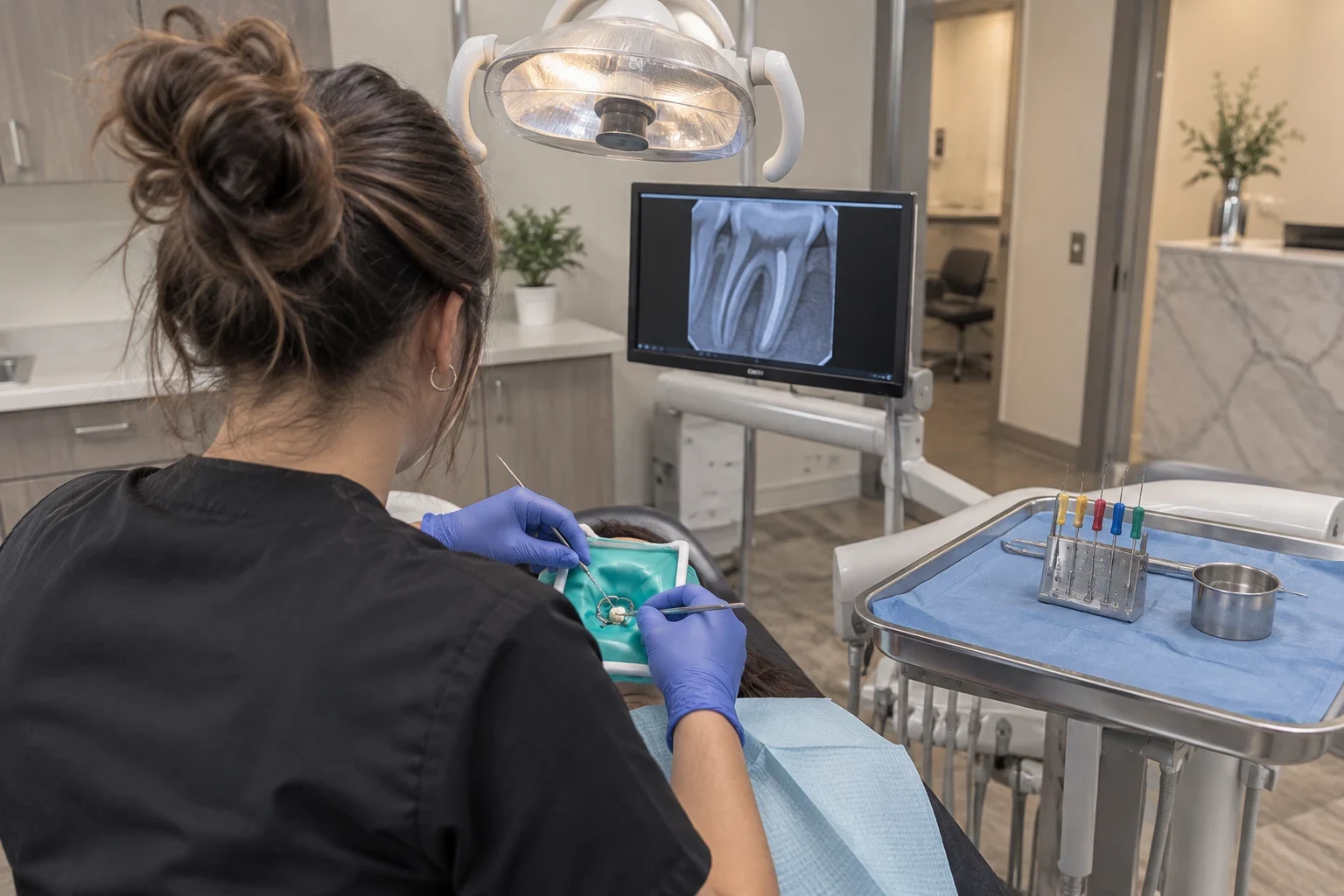
X-rays show decay and any infection sitting at the tip of the root. If the canals bend or are hard to read, a CBCT scan gives a 3D picture so a hidden canal does not get left behind.
Full numbing and comfort
We numb the area and test it before any work begins. Feel something, let us know, and we pause and give you more.
Cleaning and sealing the canals
The infected pulp comes out, then each canal is shaped and rinsed. We fill the canals with gutta-percha, a rubbery material, and place a filling on top to keep bacteria out.
Planning the crown
A molar or premolar that has had a root canal is easier to crack. In most cases it needs a crown, and we go over when and how that happens before your visit ends.
Signs Your Tooth May Need a Root Canal
- Sensitivity that will not fade
- A quick zing from ice water that is gone in a moment is often harmless. When the ache hangs on for 30 seconds or more, the nerve is probably inflamed.
- Pain that keeps you up at night
- An ache that pounds with your pulse and feels worse once you lie flat is a common sign of infection inside the tooth.
- Pain when you bite down
- If chewing hurts in one spot, the tissue around the root may be inflamed or the tooth may be cracked.
- A pimple on the gum
- A small bump that drains, then comes back, is usually an abscess. It still needs treatment even if it does not hurt.
- A tooth turning gray
- A tooth that darkens, either after a hit or slowly over months, may have a nerve that has died.
- Swelling in the gum or face
- Swelling means the infection is spreading. Get it checked soon rather than waiting for it to settle.
How Your Visit Goes
- 1
Find the cause
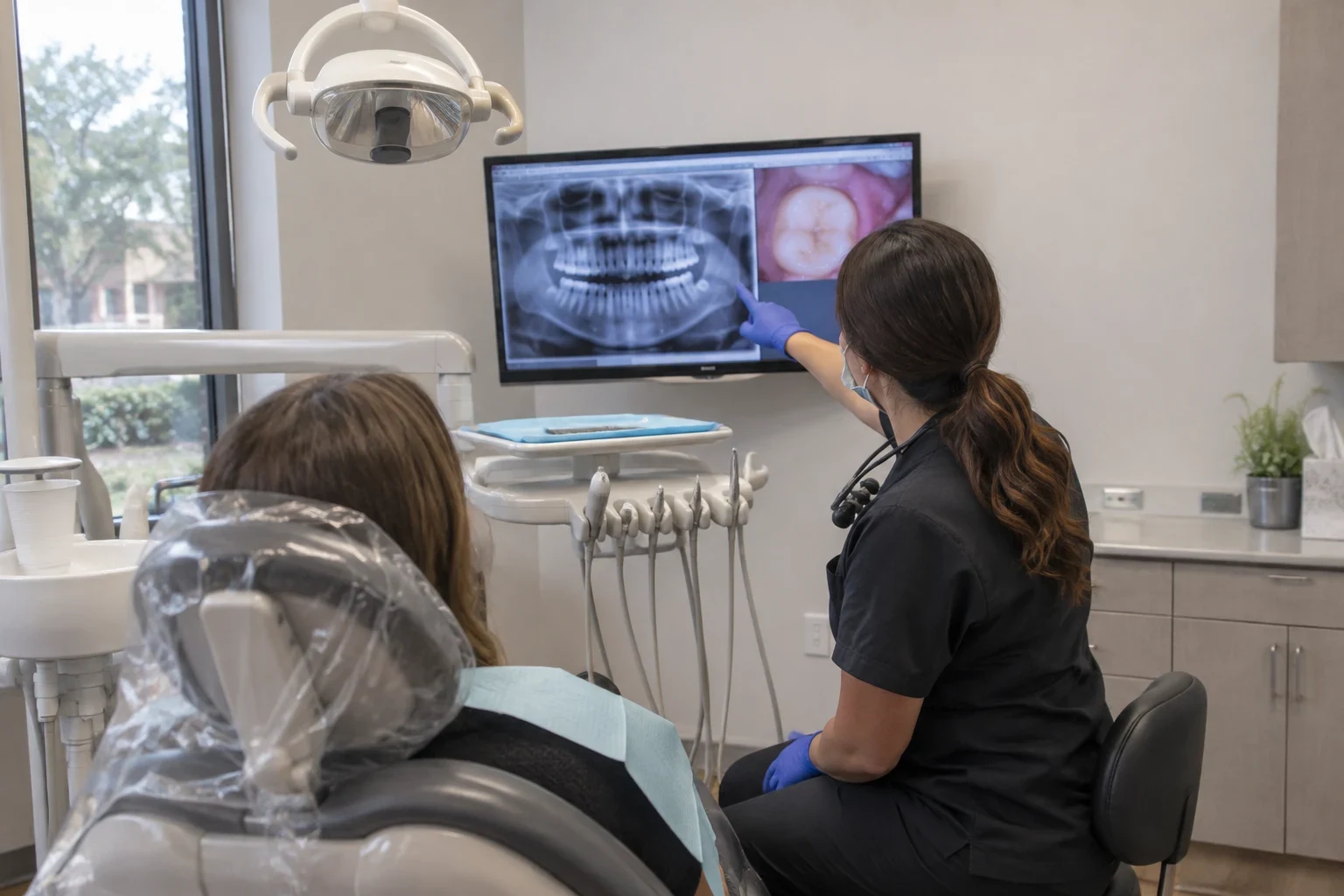
We listen to what you are feeling, then test and take images. We go over the X-rays together and show you exactly what we see.
- 2
Give you a straight answer
You learn whether the tooth can be saved, what the treatment plan involves and the cost, all before we begin.
- 3
Numb and protect the tooth
After you are numb, a thin rubber sheet goes around the tooth. It keeps the tooth clean and dry and stops bits from falling into your mouth.
- 4
Clean, fill and seal
Plan on one or two visits, each running roughly an hour. Molars have more canals and need more time. A filling closes the tooth at the end.
- 5
Crown and follow-up
The tooth may feel sore for a few days. Store-bought pain relievers like ibuprofen usually take care of it. Next we book your crown and make sure everything is healing well.
What Moves the Cost of a Root Canal
Two things set the price of a root canal: which tooth it is and what we find inside it. Once the exam is done, you get the full number, including a crown if the tooth will need one. We do not tack on new charges partway through.
- Which tooth
- A front tooth usually has one canal. A molar often has three or four, and every one of them has to be located, cleaned and sealed, so the visit runs longer.
- First treatment or retreatment
- If an older root canal has failed, we first remove the filling material left from that work. Only then can the canals be cleaned again, which adds steps and chair time.
- Whether you need a crown
- Back teeth nearly always need a crown for protection after treatment. It is a separate step with a separate fee, and it shows up in your plan from day one.
- Insurance and payment options
- We are in-network with 15+ major PPO dental insurance plans. If you have no insurance, our in-house Membership Plan is worth a look. Financing runs up to 24 months at 0% interest, and looking into preapproval does not affect your credit score.
Root Canal Questions
- Does a root canal hurt?
- Most patients compare it to getting a filling. What hurts right now is the infection, and treatment takes that source away. We make sure you are numb before we start and check in with you as we go.
- Should I just pull the tooth instead?
- Sometimes that is the better call, and we will tell you plainly when it is. Your own tooth keeps the bone and the teeth next to it in place. Once a tooth is pulled, you will usually want a bridge or dental implant later, which adds time and cost.
- How many visits will it take?
- Many root canals get done in one visit. When the infection is heavy or the canals curve and are tough to reach, we may do it in two visits with medicine placed in the tooth between them. Your crown comes at a separate appointment.
- Can I go back to work after?
- Yes. Most people return to work or school the same day. Your lip and cheek stay numb for a few hours, so wait to eat until the feeling comes back.
- How do I know I actually need one?
- Testing tells us. Start with our $25 Focused Evaluation, which covers a comprehensive exam and digital X-rays, a CBCT scan if needed, and treatment planning and consultation. If the problem turns out to need something smaller than a root canal, we treat that instead.

Find Out What Is Behind the Pain
A toothache rarely gets better by waiting. Call us, tell us what you are feeling and we will get you in to test the tooth and give you a clear plan.