ServicesExtractions
Tooth Extractions in Prosper
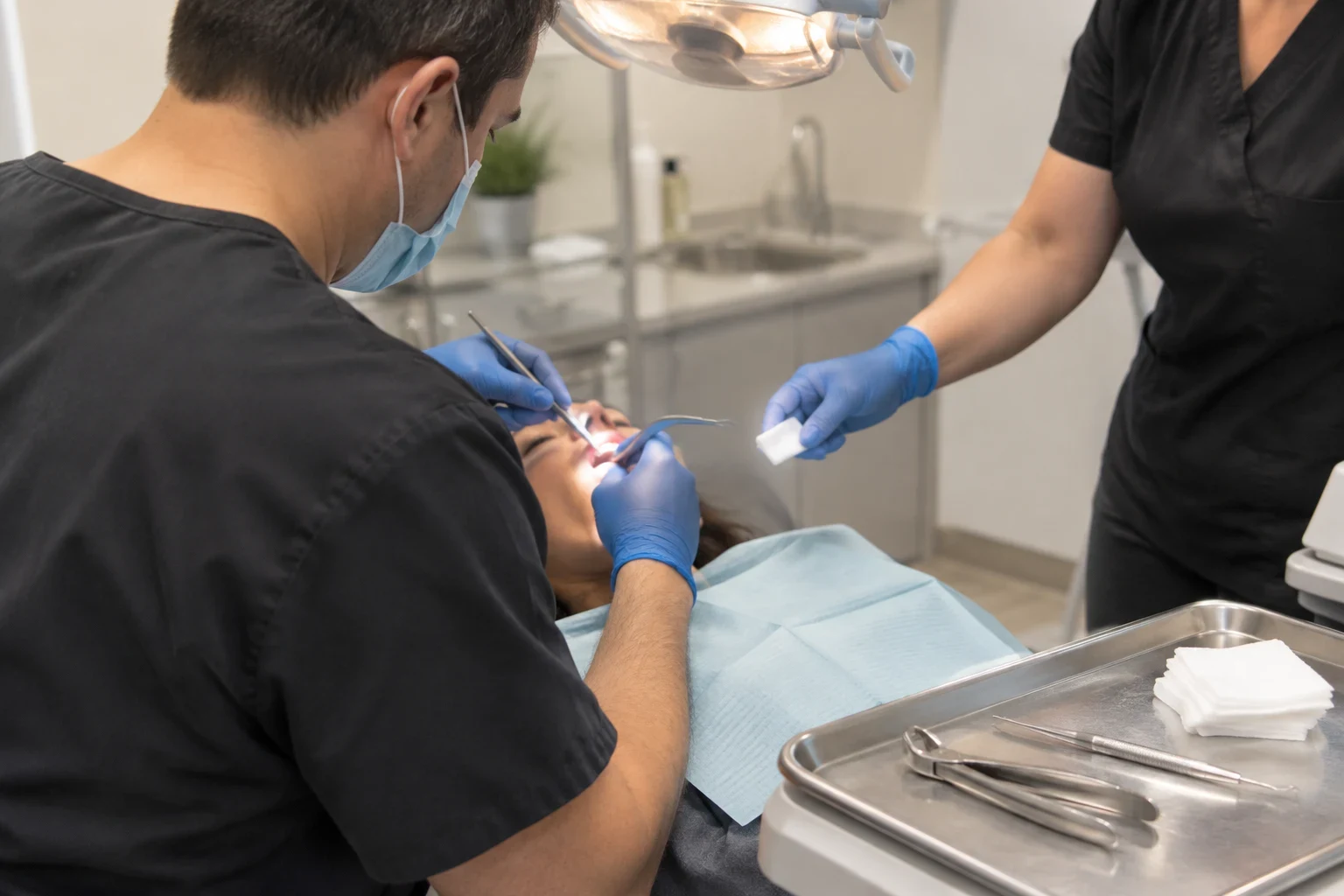
A tooth that hurts or has cracked does not always need to come out. We find out why it is failing first. If removal is the right call, we numb you well, take it out gently and talk through what replaces it.
When Pulling a Tooth Is the Right Call
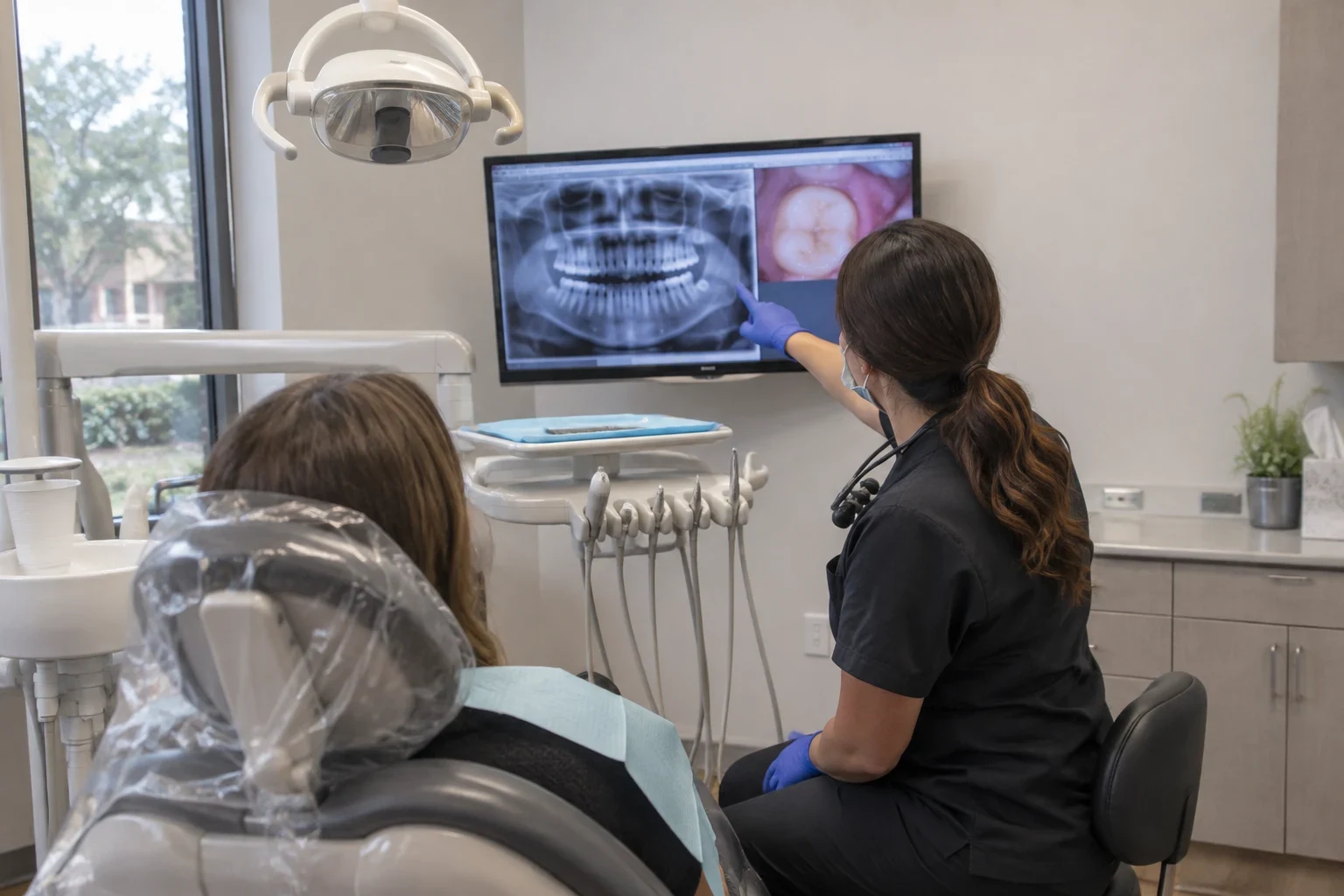
Pain is a symptom, not a diagnosis. A sore tooth can be a cavity, a crack, a gum infection or a problem with the tooth next door. So we look before we decide. Digital X-rays show the roots and the bone around them. When we need a clearer picture, a 3D CBCT scan shows how close a root sits to a nerve or the sinus.
Sometimes the answer is a filling, a crown or a root canal, and you keep your tooth. Other times the tooth is split below the gumline, the decay has gone too deep, or the bone around it is gone. Then an extraction is the honest fix, and we will tell you so plainly.
We see patients from Prosper and nearby towns like Celina, Frisco and McKinney for simple and surgical extractions. Wisdom teeth have their own page, Wisdom Teeth Removal, since that work is planned a little differently.
What Your Extraction Includes
- Exam and imaging first
- We check the tooth, your gums and your bite, and take digital X-rays. A CBCT scan is added only if the roots or nearby nerves need a closer look.
- A straight answer on saving it
- If a root canal or crown would keep the tooth healthy, we say so. You get the options side by side and decide.
- Good numbing before we start
- We numb the tooth and the gum around it and wait until you cannot feel sharp pain. You will feel pressure, and you can raise a hand to stop at any point.
- Simple or surgical removal
- When the whole crown of the tooth is showing, we can usually lift it out intact. A broken or curved tooth may need a small opening in the gum, or we take it out in pieces, which is often gentler on the bone.
- Healing steps on paper
- Before you head out, we hand you extra gauze and a printed sheet. It spells out which foods are safe, what to skip and how to keep the clot in place over the first few days.
- A plan for the gap
- We talk about whether to replace the tooth with dental implants, a bridge or dentures, and when. Planning this early helps protect the bone and keeps nearby teeth from drifting.
When Removal Might Be the Answer
A split that reaches the root
Once a fracture travels down past the gumline, the tooth usually cannot be held together. It often stings when you bite down and then release.
Deep decay that keeps coming back
When a cavity has eaten through most of the tooth, there may not be enough left to hold a crown.
A loose tooth from gum disease
If the bone holding a tooth has worn away, the tooth can start to move. Sometimes it can be stabilized and sometimes it cannot.
Swelling or a bump on the gum
This often means an infection at the root tip. A root canal may save the tooth, but not always. It should be looked at soon.
A failed root canal or old crown
A treated tooth that hurts again may have a crack or new decay underneath. We check whether retreatment makes sense or removal is the better fix.
How Extraction Day Goes
- 1
Review the plan
We go over your X-rays, your health history and any medicines you take. You know what we are removing and why before anything starts.
- 2
Numb and wait
We numb the area and give it time to work. We test it before we begin.
- 3
Remove the tooth
We loosen the tooth from the bone and lift it out, or remove it in sections if it is broken. Most simple extractions take less time than the numbing does.
- 4
Protect the socket
We clean the site, place gauze and add stitches if needed. The blood clot that forms is what heals the spot, so we explain how to keep it in place.
- 5
Check in on healing
Most people feel much better in a few days. If replacement is part of your treatment plan, we set a time to talk about next steps once the area settles.
What Moves the Cost of an Extraction
No two mouths are alike, so we price the extraction after we have seen the tooth and the images, and you hear the number before any work begins. We are in-network with 15+ major PPO dental insurance plans. If you would rather pay over time, we offer 0% interest financing for up to 24 months. Seeing if you prequalify has no credit score impact.
- Simple or surgical
- A tooth we can see and grip costs less to remove than one broken off at the gumline or still partly covered by bone.
- Root shape and location
- Curved roots, three-rooted molars, or roots that sit near a nerve or the sinus take more time and more care.
- Imaging needed
- Regular digital X-rays handle most cases. We add a CBCT scan only when the roots call for a 3D look.
- Insurance or membership
- Your PPO coverage changes what you owe out of pocket. With no insurance, our in-house Membership Plan for uninsured patients can bring the cost down.
- What comes next
- Replacing the tooth is its own step with its own cost. If an implant is likely later, we plan the timing now so nothing catches you off guard.
Extraction Questions We Hear Often
Something not covered here? (972) 823-9036
Will it hurt?
You should not feel sharp pain during the extraction because the area is fully numb. You will feel pressure and some pushing. Afterward, most people are sore for a few days and manage it with the pain relief we recommend.
Can my tooth be saved instead?
Often, yes. That is why we take X-rays and look closely before we decide anything. If a root canal or crown gives the tooth a good chance, we will tell you and explain the tradeoffs. If it cannot be saved, we will say that just as plainly.
When will the spot feel normal again?
Soft tissue over the socket typically seals within a week or two. The bone below it rebuilds more slowly, over a few months. For the first several days, skip straws, smoking and crunchy foods so the clot is not disturbed. If anything feels off while you heal, give us a call.
Do I have to replace the tooth?
Not always. A back tooth missing from the very end may cause few problems. But a gap in the middle can let neighboring teeth tip and the bone shrink. We will walk through dental implants, bridges and dentures so you can choose what fits your budget and your mouth.
I don't have dental insurance. Can I still come in?
Yes. Many of our patients are uninsured. Our Membership Plan for uninsured patients and our financing are both ways to make the cost easier to handle. We will go over the numbers before we start.

Find Out If the Tooth Can Stay
Start with a focused evaluation. We take the X-rays, look at the tooth and give you a clear answer and a treatment plan you can think over.