ServicesDentures
Dentures in Prosper, TX
We make full and partial dentures that fit because we check your gums, bone and remaining teeth before anything is made. You get a clear treatment plan, the costs up front, and follow-up visits to fine-tune the fit until you can eat and talk comfortably.
When dentures are the right fix
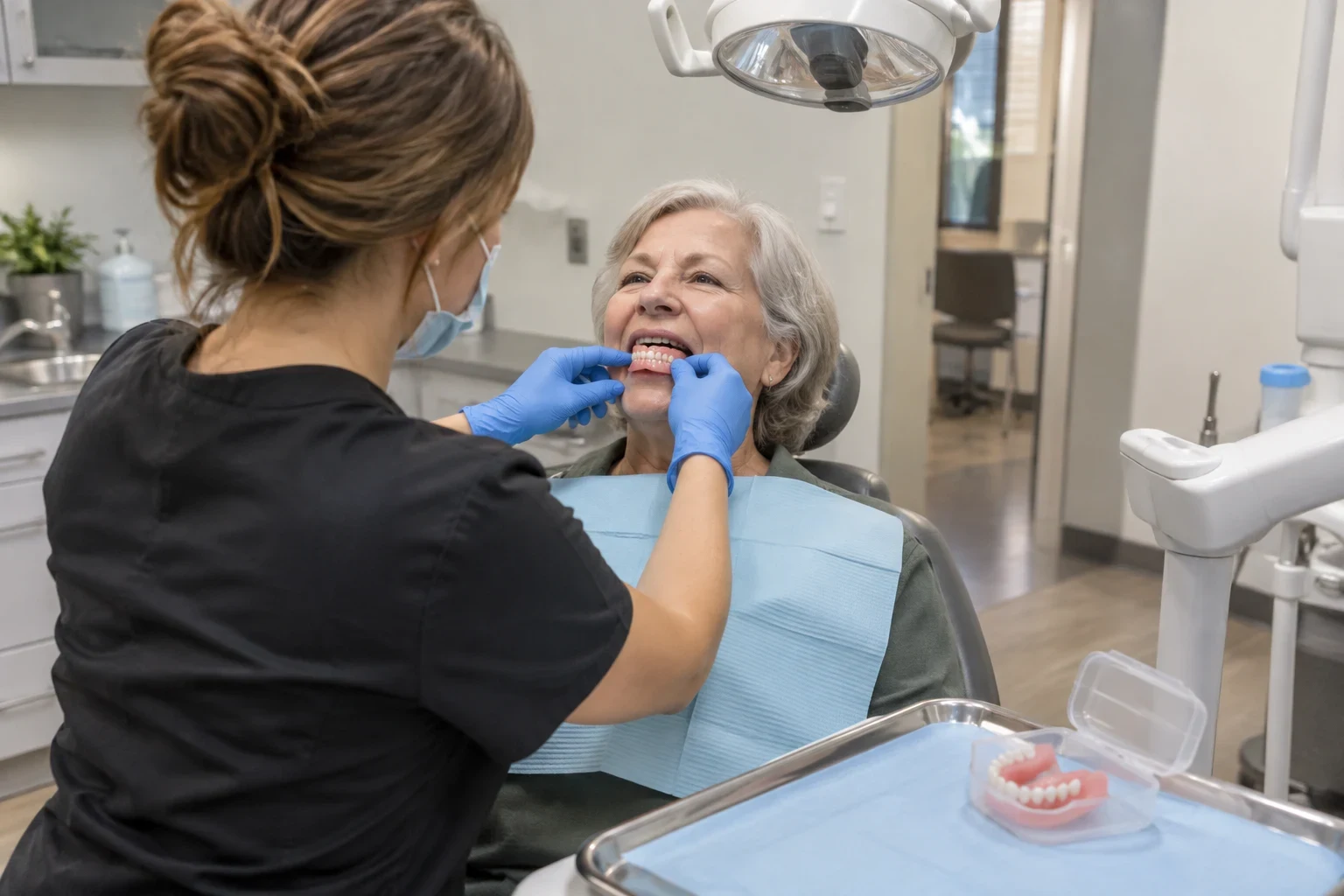
Dentures are a removable set of teeth made to fit your mouth. A full denture is for an upper or lower jaw that has no teeth left, and it covers that whole row. A partial sits in the gaps and holds on to the natural teeth you still have. Either one can get you chewing and smiling again without surgery.
Before we make anything, we look at why the teeth were lost and what is left. Gum disease, a cracked tooth, or bone that has shrunk after old extractions all change what will fit and how long it will last. A denture built on a guess tends to rock, rub and need a remake. One built on a full exam and X-rays fits better from the first day.
Some patients do better with a denture held in place by dental implants. It snaps in and stays put. If that suits your mouth and your budget, we lay it out next to a standard denture so you can compare the two.
What your denture care includes
- Exam and imaging
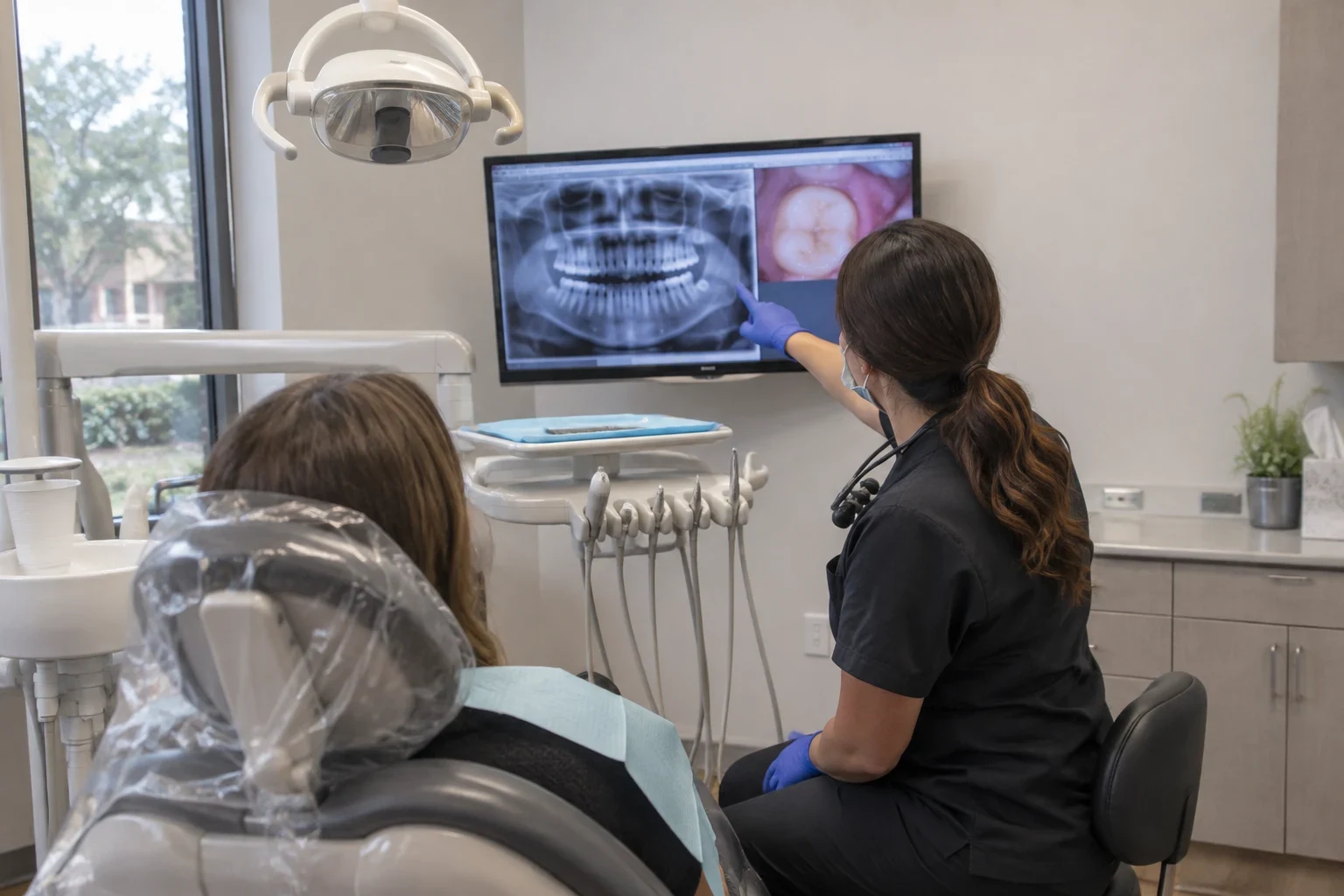
- We check your gums, your remaining teeth and the bone under them. Digital X-rays are standard. A CBCT scan is added when we need to see bone height or plan for implants.
- Full dentures
- For an arch with no healthy teeth left. The base is shaped to your gums and bite, and the teeth are chosen to suit your face and smile.
- Partial dentures
- A base that holds replacement teeth in the gaps and hooks onto your natural teeth. Those teeth have to be strong enough to carry it, so we check them first.
- Extractions as part of the plan
- If a few teeth are too far gone, we can remove them as one step in the same treatment plan. Our Extractions page covers how that visit goes.
- Fittings and adjustments
- New dentures almost always need small tweaks. We bring you back to ease sore spots and fine-tune the bite.
- Relines and repairs
- Gums and bone change over the years. When an older denture starts to slip, a reline can refit it. We tell you whether a reline or a new set makes more sense.
Signs it may be time for dentures
Several teeth are missing
Gaps make chewing hard and let the other teeth drift. When more teeth are gone than a bridge can cover, a partial or full denture is often the next step.
Teeth are loose or sore
Teeth that wiggle or ache when you bite can point to gum disease or bone loss. We find the cause before deciding which teeth can stay.
Your current denture slips or rubs
A denture that moves when you talk or eat, or leaves sore spots, usually means your gums have changed underneath. That can be fixed, but we need to look first.
You avoid certain foods
If you cut everything into small bites or skip steak and raw vegetables, the teeth you have are not doing the job.
The same teeth keep breaking
Fillings and crowns on teeth that keep failing add up. Sometimes a planned denture costs less over time than more patching. We give you a straight answer either way.
How we make your dentures
- 1
Evaluation and imaging
We start with an exam, digital X-rays and, if needed, a CBCT scan. We look at your gums, your bone and any teeth that might stay. Then we explain what we found and what your options are.
- 2
Your written treatment plan
You get a plan that lists each step and its cost, plus what your insurance is expected to cover. Nothing starts until you say yes.
- 3
Impressions and bite records
We take molds of your mouth and record how your jaws meet. You pick tooth shape and shade. A wax try-in lets you see and feel the set before the final one is made.
- 4
Delivery and first fit
We seat the new set, check how your teeth meet, and walk you through daily care, including the easiest way to get them in and out. Your gums may be tender for a bit, and speaking and chewing take some practice at first.
- 5
Follow-up visits
We see you again in the first few weeks to ease pressure spots. Small tweaks are normal and part of the plan.
What affects the cost of dentures
Dentures do not have one set price, because no two mouths need the same work. We settle your cost at the treatment plan stage, after the exam, so you see the number before anything starts. We are in-network with 15+ major PPO dental insurance plans. If you would rather pay over time, our financing carries 0% interest for up to 24 months, and seeing if you preapprove will not affect your credit score.
- Full or partial
- A full arch and a partial use different materials and lab work. Replacing both upper and lower adds to the total.
- Work needed first
- Extractions, gum treatment or smoothing the bone before the denture all change the cost. The exam tells us what is actually needed.
- Materials and tooth grade
- Denture bases and teeth come in different grades. Better teeth look more natural and wear longer, and we explain the difference plainly.
- Implant support
- Adding dental implants to hold a denture costs more up front. Many patients find the firmer hold worth it, but it is a choice, not a requirement.
- Insurance or membership
- PPO coverage varies from plan to plan. If you have no insurance, ask about our In-house Membership Plan for uninsured patients.
Denture questions we hear
Something not covered here? (972) 823-9036
How long until I get my dentures?
It depends on whether teeth need to come out first and how quickly your gums heal. Once your mouth is ready, most cases take several visits over a few weeks. We give you a timeline at the treatment plan visit.
Will I be without teeth while I heal?
Not always. In many cases we can make an immediate denture that goes in the day your teeth are removed. It will need relines as your gums shrink during healing. We will tell you whether that option fits your case.
Will new dentures hurt?
Expect a few sore spots in the first weeks while your gums get used to them. That is what the follow-up visits are for. Soreness that does not ease means something needs adjusting, so let us know.
Should I get a partial denture or dental implants?
A partial is removable and costs less up front. Dental implants are fixed in place and help keep the jawbone from shrinking, but they need enough bone and a surgical step. After the exam we show you both side by side.
My denture is loose or cracked. Does it have to be replaced?
Often it does not. A crack, a chipped tooth or a set that has gotten loose can usually be mended or relined. If the base is worn out or your gums have changed a lot, we say so plainly and explain why a new set is the better use of your money.
Does insurance cover dentures?
Many PPO plans cover part of the cost, often with waiting periods or yearly limits. We are in-network with 15+ major PPO plans and check your benefits before treatment, so the plan you sign shows what you owe.

Find out what will fit your mouth
Set up a visit and we will look at what is going on, explain your options in plain terms, and hand you a treatment plan with costs before any work begins.